HEAVY LOADS · SHOCK · DEMANDING DUTY CYCLES
Robust hydraulic actuation for construction, mining, lifting and mobile equipment operating under severe mechanical and environmental loads.
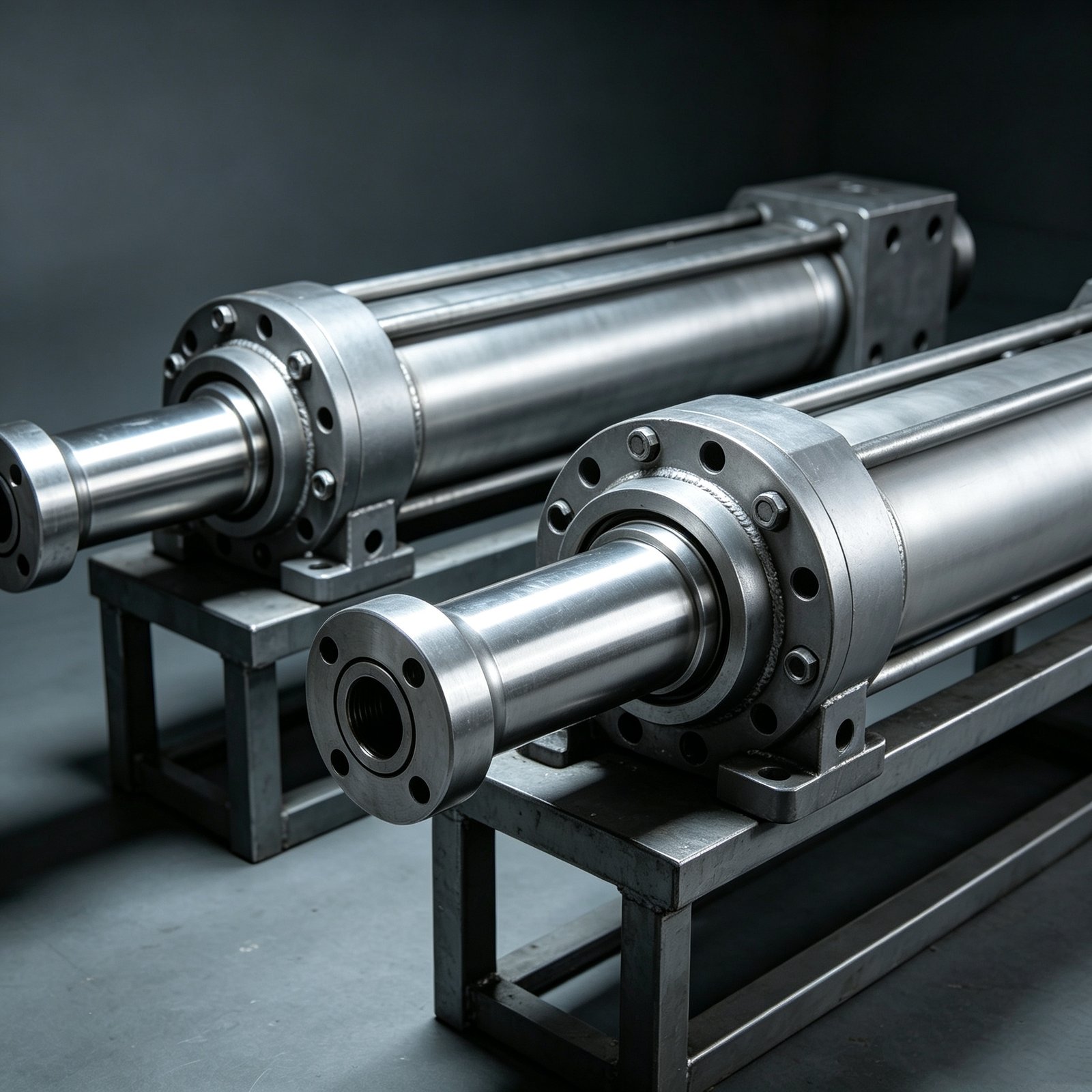
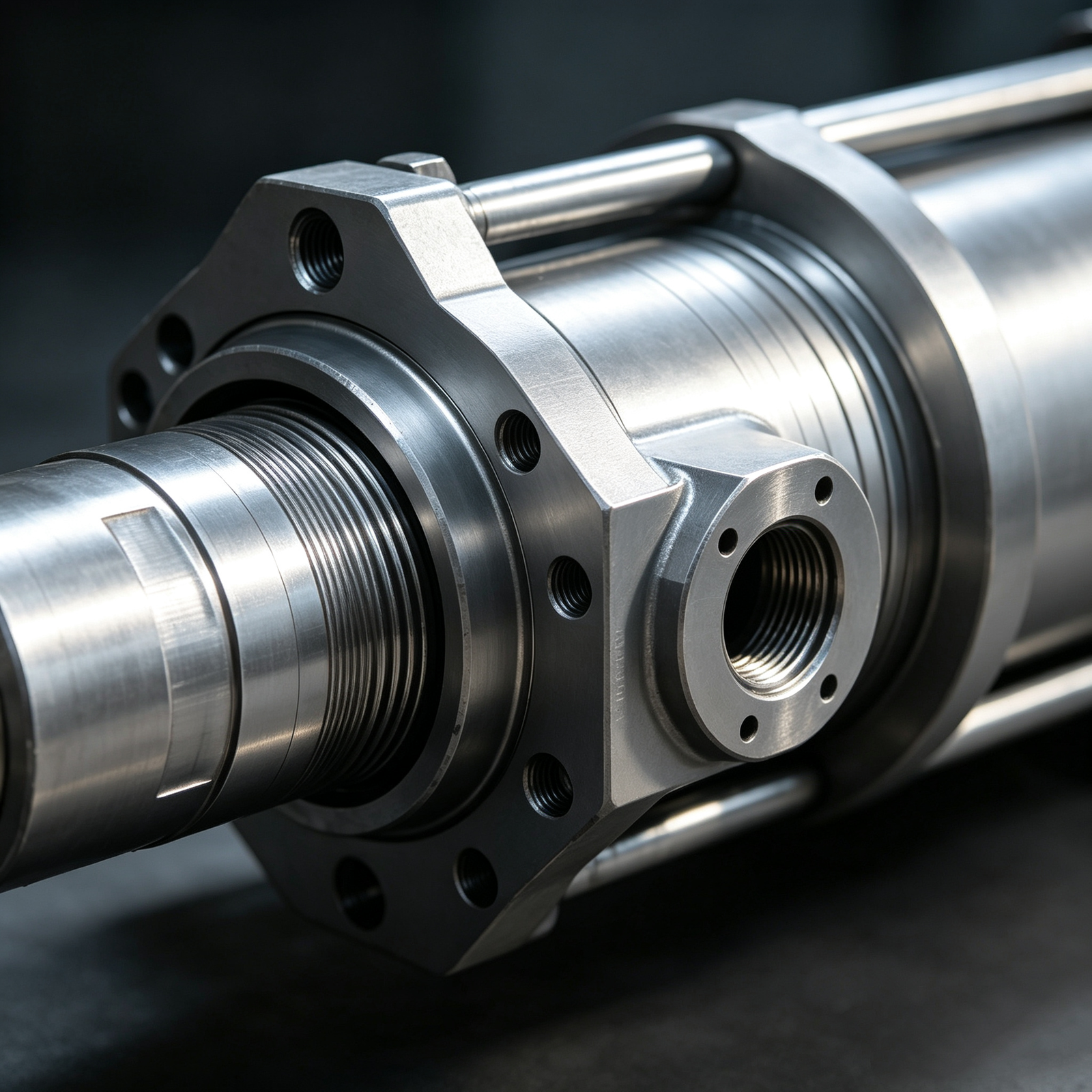
Heavy-duty cylinder performance depends on the complete load path. Barrel and rod strength, weld and end-closure design, bearing length, sealing, mountings and contamination protection must work together under repeated loads and potential shock.
APPLICATION FIT
Why This Cylinder Type Is Selected
Selection should be based on machine function, load path, available space and service conditions—not only on nominal dimensions.
Robust Load Path
Structural dimensions and mounting interfaces are reviewed around force, impact, side load and duty cycle.
Wear and Contamination Control
Rod finish, wipers, seals and guide elements are selected for the operating environment.
OEM Configuration Support
Welded, telescopic, single-acting and double-acting designs can be adapted to machine geometry.
TECHNICAL INPUTS
Describe the Real Load, Not Only the Cylinder Size
Heavy equipment often introduces shock, side load and pressure spikes that are not visible in a simple bore-and-stroke specification.
- Machine function, load case and required push/pull force
- Normal and peak pressure, holding time and cycle frequency
- Bore, rod, stroke, closed length and buckling considerations
- Mounting geometry, side load, impact and pin loading
- Dust, water, corrosion, temperature and maintenance conditions
- Drawing, sample cylinder, machine photos and expected quantity
RELATED EQUIPMENT CYLINDERS
Explore Relevant Product Applications
Use the published product pages below to review typical machine functions and available product imagery.
ENGINEERING SUPPORT FOR OEM & REPLACEMENT PROJECTS
Send Your Cylinder Requirements for a Technical Review
Share the machine model, cylinder function, bore, rod diameter, stroke, working pressure, mounting dimensions, port details and expected quantity. Drawings or clear photos help our team review interchangeability and application fit.
FREQUENTLY ASKED QUESTIONS
Heavy Duty Hydraulic Cylinders FAQ
These answers provide a starting point. Final cylinder selection should be checked against the actual machine and hydraulic circuit.
What makes a hydraulic cylinder heavy duty?
It is the combination of structural design, rod stability, bearing and seal selection, mountings, surface protection and validation against the actual load cycle.
How should shock loads be communicated?
Provide the machine function, moving mass, geometry, operating sequence, known pressure spikes and any sudden stops or external impacts.
Can an existing heavy-duty cylinder be upgraded?
Potentially. An engineering review should compare failure history, available space, mountings, pressure, rod stability and the surrounding machine structure.
 English
  Russian
  Spanish
  Arabic
  French
  Portuguese
  Vietnamese