
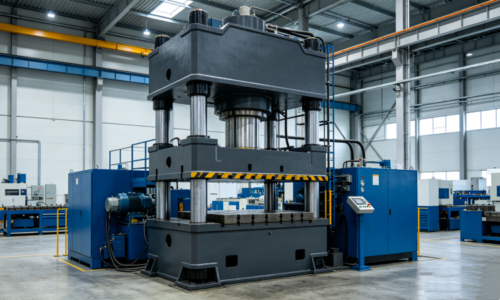
Hydraulic Cylinder Rebuild Diagram: Parts and Workflow
A hydraulic cylinder rebuild workflow showing disassembly, inspection, seal identification, controlled assembly and guarded pressure testing.
Руководства по осмотру, уплотнению и техническому обслуживанию гидравлических цилиндров.
A hydraulic cylinder rebuild workflow showing disassembly, inspection, seal identification, controlled assembly and guarded pressure testing.
Hydraulic cylinder seal failure commonly results from contamination, damaged surfaces, misalignment, extrusion, heat, incompatible fluid or incorrect installation.
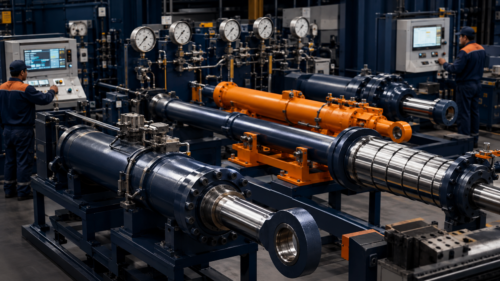
A cracked hydraulic cylinder is a pressure-boundary defect requiring isolation, material identification, root-cause analysis and a qualified repair procedure.
Remove a hydraulic cylinder gland only after identifying its retainer, releasing pressure, cleaning the barrel end and supporting the rod assembly.
Diagnose a suspected bad hydraulic cylinder by separating external leakage, internal bypass, valve drift, binding, pressure loss, and machine geometry.

A bent hydraulic cylinder rod requires dimensional, material and surface assessment; uncontrolled field straightening can hide cracks and damage seals.
Identify the ring design, expose its ends, control stored spring energy, and protect the barrel groove when removing a hydraulic cylinder snap ring.
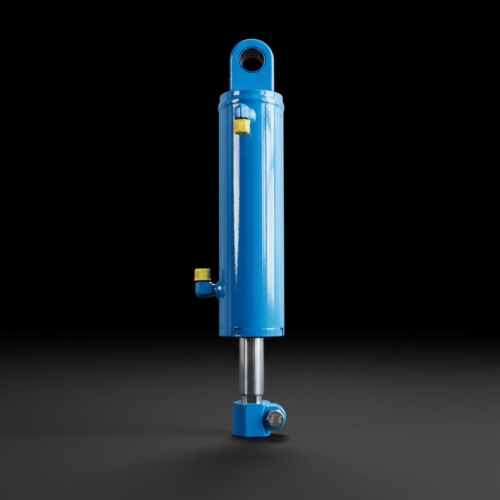
Remove a hydraulic cylinder piston only after safe disassembly, retention identification, controlled rod support, and documentation of seal orientation.
A practical industrial procedure for removing a hydraulic cylinder: support the load, release stored energy, label lines, unload pins, and preserve interfaces.
Hydraulic cylinder chatter can result from trapped air, cavitation, stick-slip, valve instability, contamination, side load, or a changing mechanical load.
 English English
 Russian
 Spanish
 Arabic
 French
 Portuguese
 Vietnamese